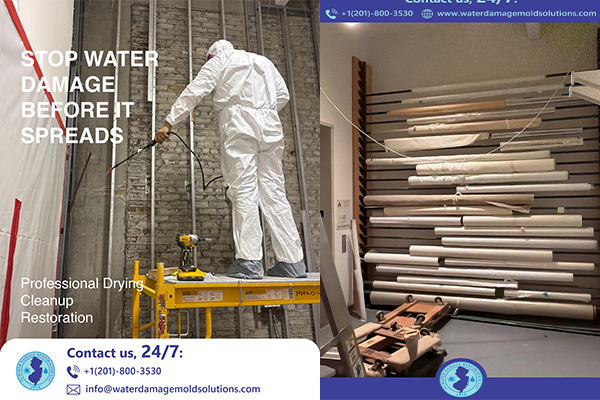
Water damage does not always end when the visible water disappears. Moisture can remain behind walls, beneath flooring, inside building materials, and in other areas that are difficult to see.
For homeowners in Clifton, NJ and throughout New Jersey, confirming that a property is properly dried is an important part of the water damage restoration process.
At NJ Water Damage Restoration LLC, the water removal process includes moisture detection, professional drying and dehumidification, and a final inspection to help determine whether affected areas have been properly restored.
Why a Room Can Look Dry but Still Contain Moisture
After standing water has been removed, surfaces may begin to look normal again. However, moisture can remain trapped in concealed areas.
According to the company’s restoration process, technicians use infrared cameras and moisture meters to detect hidden water behind walls, under floors, and in other concealed locations. This step helps identify moisture that may not be visible during a basic visual inspection.
This is one reason simply touching a wall or looking at a floor is not always enough to determine whether the area is completely dry.
1. Professional Moisture Detection
One of the most important steps after water removal is checking the moisture level throughout the affected area.
Professional moisture detection can help identify water in locations such as:
- Behind walls
- Beneath flooring
- Around structural materials
- Inside concealed areas affected by the original water intrusion
NJ Water Damage Restoration LLC includes moisture detection as part of its water removal process, using infrared cameras and moisture meters to locate hidden water that could otherwise be missed.
2. Structural Drying and Dehumidification
Removing standing water is only the beginning.
After visible water has been extracted, professional drying equipment is used to remove remaining moisture from the affected space.
NJ Water Damage Restoration LLC states that its technicians use industrial-grade dehumidifiers and air movers to thoroughly dry affected areas after water extraction.
The company’s broader restoration process also describes advanced drying and dehumidification as a key step after water extraction.
Professional drying may be necessary for materials such as walls, floors, and other structural components that can hold moisture after the visible water is gone.
3. Check Areas That Are Easy to Overlook
Some of the most important areas to inspect are the places you cannot easily see.
Water may travel beyond the area where the original leak or flooding occurred. That is why professional moisture detection is used to check concealed spaces instead of relying only on visible conditions.
The company’s clean-up and repair process specifically includes moisture detection and damage assessment to identify hidden water pockets and determine the full extent of the damage before developing a restoration plan.
4. Drying Should Continue Until the Area Is Properly Assessed
A home should not be considered fully dry simply because the floor no longer feels wet.
Professional restoration involves monitoring the affected space, using drying equipment, and checking moisture conditions before moving on to repairs or restoration.
The drying process described by NJ Water Damage Restoration LLC uses commercial equipment to address moisture that may remain trapped in walls, flooring, furniture, and other affected materials.
5. A Final Inspection Matters
The final inspection is one of the clearest ways to determine whether the water removal and drying process has been completed properly.
According to NJ Water Damage Restoration LLC, once the water has been removed and the area is dry, the team conducts a thorough inspection to confirm that the property is safe and properly restored. If necessary, repairs or replacement of damaged drywall, insulation, flooring, or other materials may follow.
A final inspection helps ensure that restoration is not based only on appearance.
Signs You May Still Need Professional Drying
If your property recently experienced a leak, flood, burst pipe, or another water-related incident, it may be worth having the affected areas professionally checked when you are unsure whether everything has dried properly.
Professional moisture detection is especially useful when water may have reached areas behind walls or under flooring.
The company also lists burst pipes, roof leaks, flooding, and appliance failures among situations where fast water damage clean-up and repair may be needed.
Why Fast Water Removal and Drying Matter
NJ Water Damage Restoration LLC provides 24/7 water removal services in Clifton, NJ and throughout New Jersey. Its process includes emergency assessment, water extraction, moisture detection, drying and dehumidification, sanitizing, final inspection, and restoration when needed.
Taking action quickly can help limit additional property damage and allow the restoration process to begin sooner.
Professional Water Damage Drying in Clifton, NJ
If your home or business has experienced water damage, visible dryness does not always tell the full story.
Professional moisture detection, water extraction, structural drying, dehumidification, and final inspection can help determine whether affected areas have been properly dried and restored.
NJ Water Damage Restoration LLC serves Clifton, NJ and surrounding New Jersey communities with 24/7 emergency water damage services. The company is located at 162 Highland Ave, Clifton, NJ 07011 and can be reached at 201-800-3530.
Need Water Damage Help?
If you have experienced flooding, a leak, or standing water in your property, contact NJ Water Damage Restoration LLC for professional water removal and drying services.
📞 Call: 201-800-3530
📍 Clifton, NJ
🕐 24/7 Emergency Service